
Because wellbeing deserves a place in the workday.
The weeks leading into the holidays can fill up quickly. Year-end deadlines overlap with travel plans, family responsibilities, and calendars that leave little room to pause. When routines shift and sleep gets pushed aside, employees may arrive at work already feeling stretched.
Workplace wellness spaces give people a designated place to step away from those demands during the day. A few moments away from a screen, a meeting, or a busy shared workspace can become an accepted part of the workday when there is a clear place for them.
At Thinkspace, making room for recovery means giving employees an opportunity to recover, recharge, and reset in the places where they already work.
Give Recovery a Place in the Workday
Offices make room for meetings, focused work, and collaboration. Planning for recovery deserves the same practical consideration.
An office recovery space is a designated setting where employees can take a break from their immediate work environment. Depending on the workplace, that might be a quiet room, a comfortable retreat, or an area equipped with purpose-built wellness furniture.
Start with the employee’s experience. After a demanding meeting, where can someone take a few uninterrupted minutes? During a busy afternoon, is there somewhere to rest without sitting in the middle of a conversation or checking messages at a desk?
A space set aside for recovery makes that option easier to find. It also gives a workplace wellbeing program a physical presence that employees can use throughout the year.
Two Ways to Bring Recovery into the Workplace
Thinkspace’s workplace wellness collection includes NeuroPod and the Recovery Chair, two solutions powered by Neurosonic low-frequency vibration technology. Each offers a different format for incorporating a recovery session into the day.
NeuroPod for a Full Body Recovery Experience
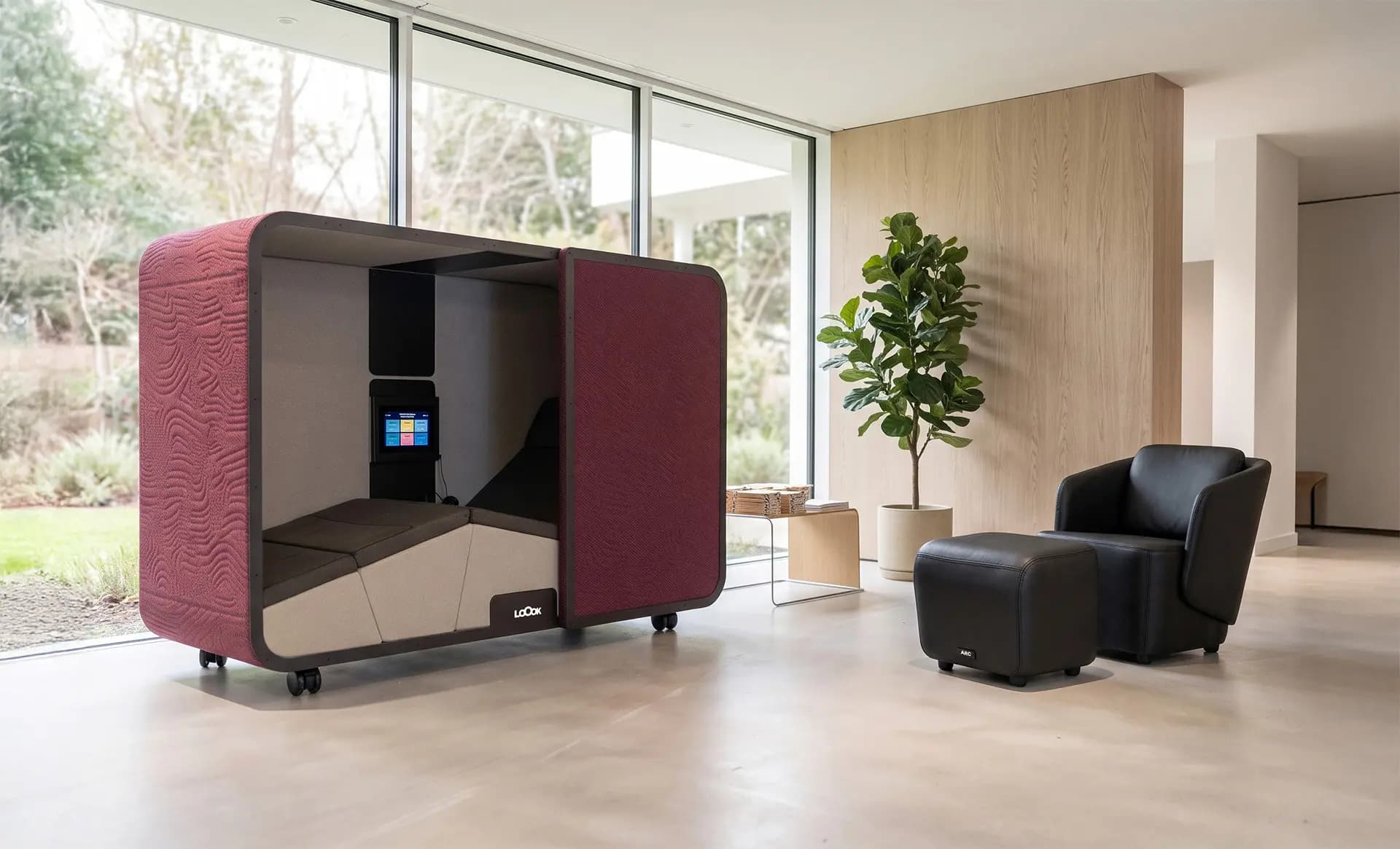
The NeuroPod combines a reclining surface with full-body Neurosonic low-frequency vibration technology. An integrated touchscreen lets users choose among built-in programs for relaxation, recovery, power naps, and activation.
Headphones are integrated into the experience, and an optional fixed privacy screen can provide additional visual separation from the surrounding space.
For organizations creating a dedicated wellness area, NeuroPod offers a place where employees can recline and choose a program suited to the moment. Its range of programs makes it worth considering when the goal is to offer several types of recovery experiences in one setting.
Recovery Chair for a Simple Seated Session
The Recovery Chair offers targeted Neurosonic low-frequency vibration technology with simple one-button operation and a 16-minute program.
That straightforward format gives employees a clear starting point: a comfortable seated setting and a defined session length. It is an option to consider for a staff wellbeing area where ease of use is a priority.
Choosing between the two starts with the experience you want to offer, the available space, and how employees will use it. Thinkspace can help you explore the options as part of your workplace planning.
Make the Space Easy to Find and Use
Furniture is one part of an effective recovery area. Placement and everyday expectations matter, too. When planning a workplace wellness space, consider these practical steps:
- Choose a quieter location. Look for a setting away from busy walkways, active conversations, and the most distracting parts of the office.
- Make the purpose clear. Let employees know the area is available for recovery and how to access it. If sessions require booking, keep the process simple.
- Plan for comfort and choice. Consider lighting, visual privacy, accessible circulation, and the needs of people who may prefer different kinds of breaks.
- Provide clear guidance. Make product instructions available and help employees understand how to use the equipment appropriately. Participation should be voluntary.
Pair the space with reasonable workloads, supportive management, and permission to take a break. Wellness furniture can contribute to that broader approach, but it cannot replace healthy working practices or professional care.
Consider How the Workplace Feels
A recovery area also opens a useful conversation about the rest of the office. Sound, lighting, and layout shape the experience of moving through a workday. Planning those elements together can help teams offer settings for both activity and rest.
For designers and workplace teams interested in that connection, Thinkspace’s Neurodesign: Brain-First Space CEU explores how sound, light, and spatial planning relate to stress, focus, and cognitive performance. The one-hour course is IDCEC approved with HSW credit.
Make Room for Recovery Beyond the Holidays
The holiday season is a useful time to notice where employees could use more support. The spaces created in response can remain part of the workplace long after the year-end rush.
Thinkspace helps organizations bring recovery into everyday workplace design with wellness solutions that give people a place to pause.
Explore recovery solutions or find your Thinkspace representative to discuss the right fit for your workplace.